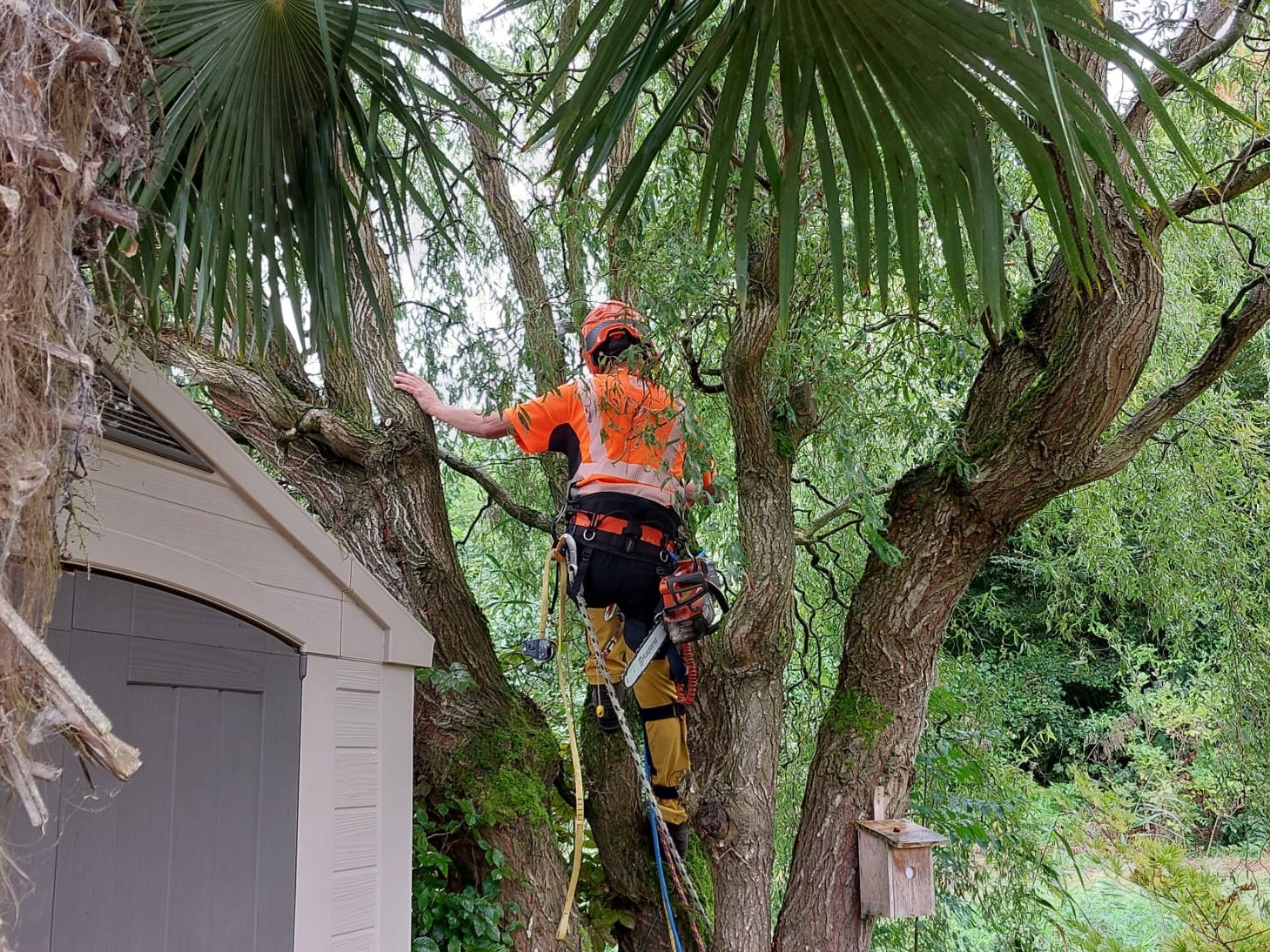
Crown lifting
Removing lower branches so more of the stem is clear of the crown. Often needed when branches hang over a house, shed or neighbouring garden, or to keep traffic clear.
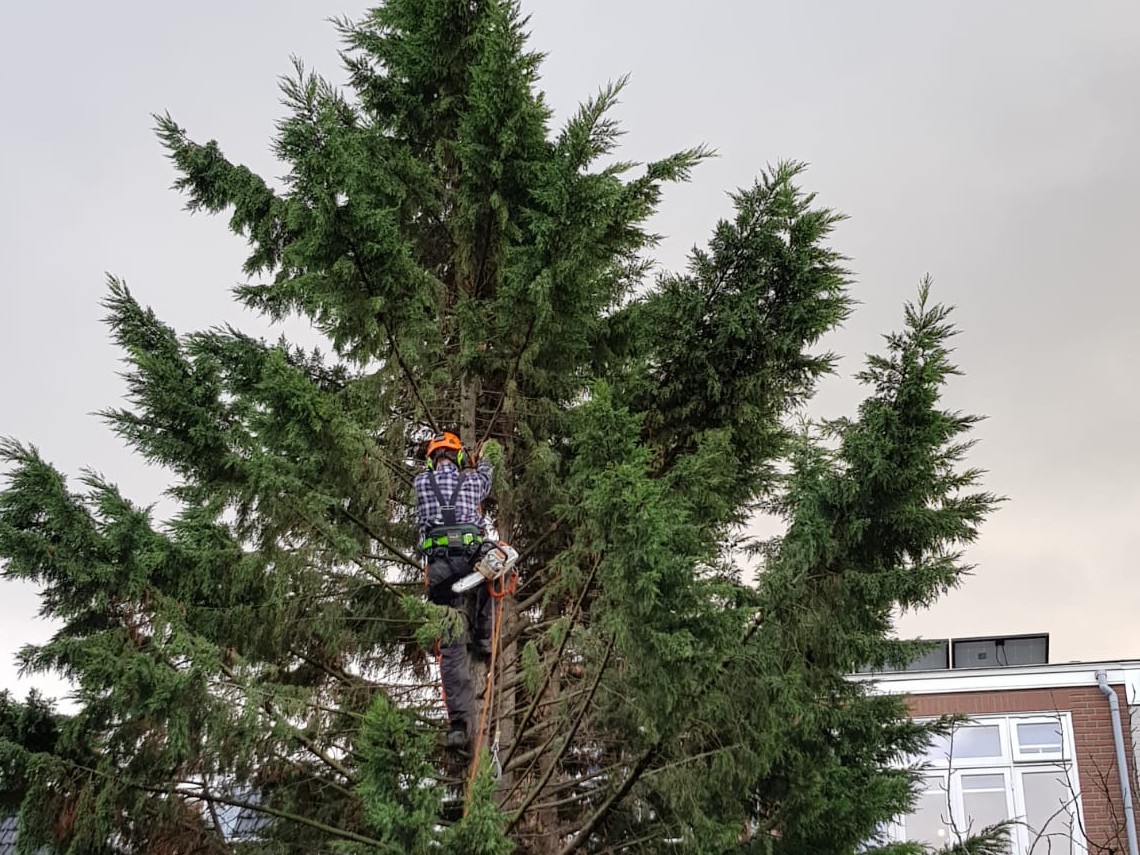
Skilled pruning for safe, healthy and well-shaped trees – with minimal disturbance.
Good pruning keeps trees healthy, safe and in shape. We prune with attention to species, growth stage and the situation around the tree – from a narrow city garden to a large plot.
Removing lower branches so more of the stem is clear of the crown. Often needed when branches hang over a house, shed or neighbouring garden, or to keep traffic clear.
Reducing density in the crown. We remove crossing branches, water sprouts and competing stems that hinder healthy growth.
Removing unwanted branches: dead wood, hazardous limbs, doubles and problem forks.
After storms, branches may break yet remain hung up. We remove them carefully so the tree can seal the wound as well as possible. Dead branches can fall without warning – preventive removal is often wise.
Reducing the crown (like topping) is best avoided for tree health, especially on older trees. If reduction is the only option, it must be done carefully and moderately. Larger limbs should only be removed when a suitable side branch can take over.
Besides willows, other species can be pollarded. Best done when the tree is leafless, typically November to March. Suitable species can often be pollarded from about the third or fourth year.
Maple: hard crown reduction often has little lasting effect – maples tend to regrow strongly (“pruning promotes growth”).
Birch: contrary to a common myth, birch can be pruned year-round. Sap bleed during the rising sap period is temporary and not a reason for concern. Birch wood is soft, so large wounds need careful cuts.